Why Italian Kitchen Design is popular in Thailand — A Complete Guide for Thai Homes and Condominiums
The Italian-Thai design gap — and how to bridge it
Italian kitchen design was born in a European context — temperate climates, low humidity, cooking habits nothing like Thailand's. None of that makes it a poor fit for a Thai home. It just means a few decisions have to be made at the specification stage, decisions that a standard showroom walkthrough usually won't raise on its own.
Humidity
Thailand sits at 70–90% relative humidity most of the year. Cabinet materials that skip proper surface treatment, or fall short of CARB P2 for composite wood, tend to warp, swell, or delaminate well before their time in this climate. Every STOSA CUCINE product meets CARB P2 — the California Air Resources Board's Phase 2 standard, the strictest benchmark globally for formaldehyde emissions in composite wood. It's not something bolted on afterward. It's decided at the design stage, and in Thailand, it's the difference between a kitchen that lasts and one that doesn't.
Designing for Bangkok condo footprints
Most premium Bangkok condos give you 5 to 15 square metres to work with. Italian modular systems handle this well — every piece is built to fit precisely against the next, so STOSA's modular approach delivers real efficiency without the kitchen looking crowded or compromised. Hidden storage, integrated appliance panels, open kitchen-to-living layouts — all of this is possible even in a compact Thai condo, if the system is built for it.
Ventilation for Thai cooking
Thai cooking simply produces more — more heat, more steam, more aroma — than European cooking. Where the hood sits, how much it can extract, how the kitchen relates to windows and air-con — none of this can be an afterthought. STOSA's design consultants plan cooking zones and extraction around how Thai households actually cook, not just how the layout looks on paper.
Which style fits which home
Contemporary suits Bangkok condos looking for clean lines, handle-free cabinetry, and matte or high-gloss finishes that hold their luxury feel in a smaller footprint. Transitional sits between warmth and modernity — the right call for high-end apartments or landed homes where the client wants a kitchen that feels lived-in, not sterile. Classic is the natural choice for Phuket villas: sculptural doors, wood-effect finishes, the kind of detailing that only looks better with age in a large residential space.
Materials for the Thai climate
Lacquered MDF, thermofoil, and melamine-surfaced panels all hold up well in humidity when made to the right standard. STOSA CUCINE's entire collection specifies at or above CARB P2, so what a client chooses is built to last — not just to look good on installation day.
Working with STOSA in Thailand
STOSA CUCINE has showrooms in Bangkok and Phuket, with consultants fluent in both Italian manufacturing standards and what Thai residential projects actually require. Every project starts with a complimentary 3D render and an itemised quotation, before anyone has to commit.
STORE LOCATOR
Stosa cucine stores offer a valuable shopping experience.
From a project defined in every detail to an environment to be experienced in your own home
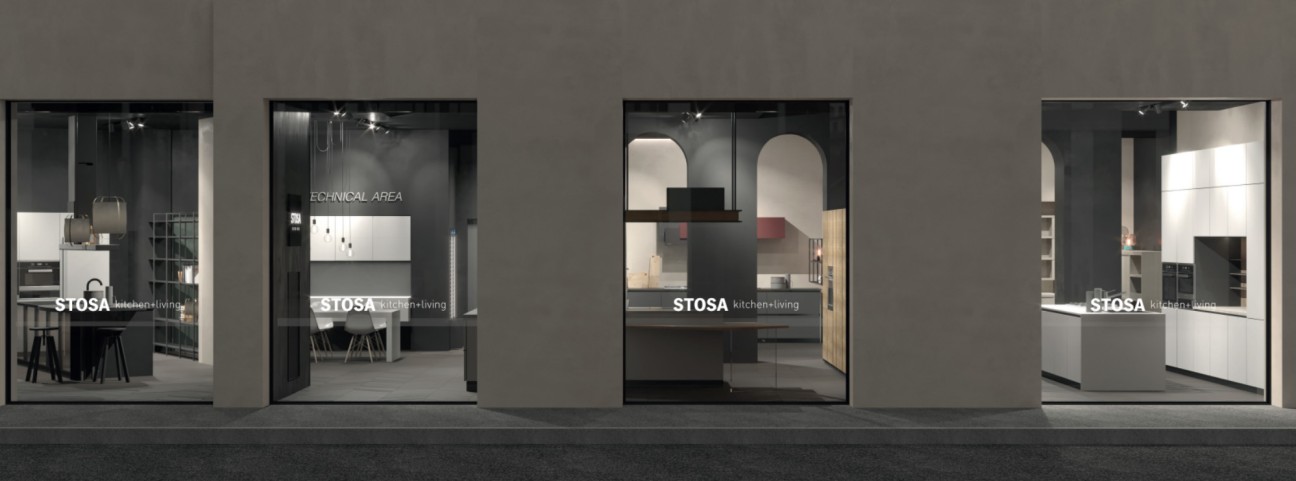
Crystal design center (cdc), building f, 1st floor 888 praditmanutham rd, khlong chan, bangkapi district, bangkok, thailand 10240